
International travelers between Japan and the United States often encounter a deceptive compatibility issue: while plug shapes appear identical, the underlying electrical standards differ significantly. This guide explains the technical distinctions and provides practical solutions for safe device operation in both countries.
Plug Shape Compatibility
Physical Standards
Both Japan and the United States utilize NEMA 1-15 Type A plugs with identical specifications:
- Two flat parallel blades measuring 6.3mm × 1.5mm
- Blade spacing of 12.7mm
- No grounding pin on standard outlets
Result: US two-prong plugs physically fit Japanese outlets without mechanical adapters.
Grounding Considerations
| Plug Type | US Availability | Japan Availability |
|---|---|---|
| Type A (2-prong, ungrounded) | Standard | Standard |
| Type B (3-prong, grounded) | Common | Limited (newer buildings) |
Note: US devices with three-prong grounded plugs require ground pin adapters in Japan, though this only addresses mechanical fit—not electrical compatibility.
The Critical Voltage Difference
Electrical Standards Comparison
| Country | Voltage | Frequency | Standard Plug |
|---|---|---|---|
| Japan | 100V | 50Hz (East) / 60Hz (West) | Type A |
| United States | 120V | 60Hz | Type A/B |
The 20-volt differential creates two distinct risk scenarios:
US Device in Japan (120V → 100V):
- 17% power reduction
- Heating appliances operate below rated capacity
- Motors run slower than designed
- Non-switching power supplies may overheat compensating for voltage drop
Japanese Device in US (100V → 120V):
- 20% power excess
- Accelerated component degradation
- Overheating risk in resistive heating elements
- Potential safety hazards
Device Compatibility Categories

Dual-Voltage Devices (No Converter Required)
Modern electronics with switching power supplies automatically accommodate 100-240V:
- Laptop chargers (all major brands)
- Smartphone/tablet chargers
- Camera battery chargers
- Electric toothbrushes
- E-readers
Verification method: Check the power adapter label for "INPUT: 100-240V 50-60Hz"
Single-Voltage Devices (Converter Required)
These devices require step-up/step-down voltage converters:
- Hair styling tools (unless marked "dual voltage")
- Kitchen appliances
- Older electronics with transformer-based power supplies
- Some medical devices (verify manufacturer specifications)
Converter sizing: Match converter wattage to device requirements plus 20% safety margin. A 1500W hair dryer requires a minimum 1800W-rated converter.
Frequency Considerations

Japan's electrical grid operates at two frequencies:
- Eastern Japan (Tokyo, Yokohama, Sendai): 50Hz
- Western Japan (Osaka, Kyoto, Nagoya): 60Hz
- United States: 60Hz nationwide
Impact on devices:
- Synchronous motor clocks: May run slow in 50Hz regions
- Modern switching power supplies: Frequency-agnostic
- Audio equipment: Minimal impact for short-term use
For most travelers, frequency differences are negligible. Long-term residents should verify compatibility for precision timing equipment.
TESSAN Travel Adapter Solutions
For Dual-Voltage Devices
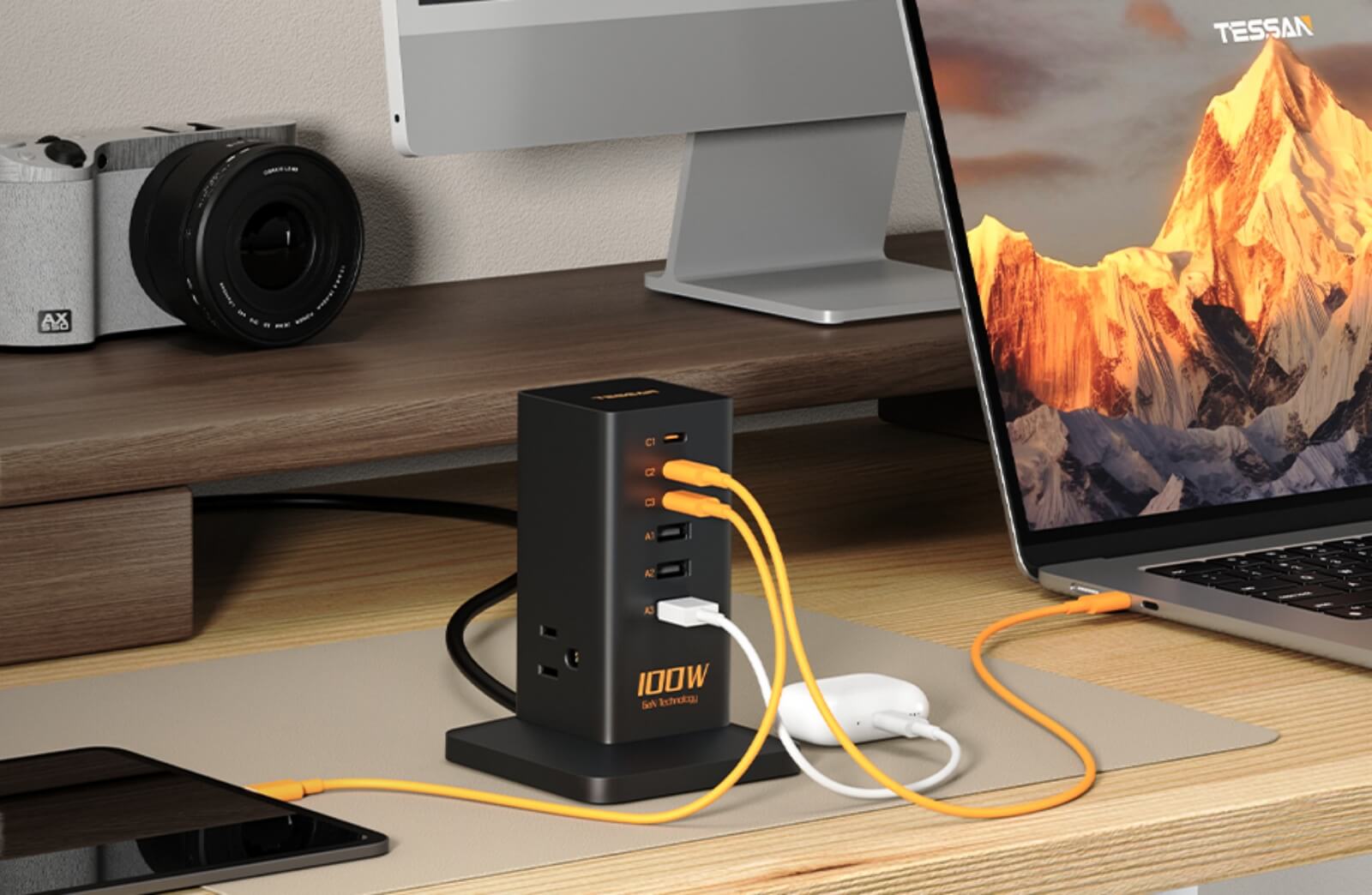
TESSAN Japan Travel Adapter
- 3 AC outlets + 4 USB charging ports
- Compact design for carry-on luggage
- Accommodates multiple devices simultaneously
- No voltage conversion (for 100-240V devices only)

TESSAN US to Japan Plug Adapter Type A
- Type A Plug Adapter
- 7 in 1 Japan Power Adapter
- USB C 15W Speed Charging
- Compact and Portable
For Comprehensive Travel Needs
TESSAN Universal Travel Adapter
- Compatible with 200+ countries & regions including Japan, US, EU, UK, Australia
- Built-in surge protection
- Multiple USB ports for simultaneous charging

TESSAN Voyager 205 Universal Travel Adapter
- The World's Most Powerful 205W
- Charge Up to 8 Devices at Once
- Smarter GaN Tech, Cooler & Safer
- Universal Compatibility in 200+ Countries & Regions
Important: Standard travel adapters modify plug shape only—they do not convert voltage. Single-voltage devices require separate voltage converters rated for appropriate wattage.
Safety Certifications
United States
- UL (Underwriters Laboratories): Primary safety certification
- ETL (Intertek): Equivalent alternative standard
- FCC: Required for RF-emitting devices
Japan
- PSE Mark: Mandatory for electrical products
- JIS (Japanese Industrial Standards): Quality benchmarks
Critical note: Certification for one country's voltage does not guarantee safe operation at different voltages, even with identical plug shapes.
Pre-Travel Checklist
Before Departure
At Destination
Extended Stays
Recommendations for Specific Scenarios
Business Travelers (1-2 weeks)
- Bring dual-voltage devices only
- TESSAN compact travel adapter for laptops and phones
- Avoid high-wattage appliances
Long-Term Residents
- Purchase local-voltage versions of frequently used appliances
- Install quality voltage converters for essential US/Japanese devices
- Verify outlet grounding in rental properties
Hosting International Guests
- Provide surge-protected power strips
- Inform guests about voltage differences
- Offer appropriate adapters or converters
While Japan and the United States share Type A plug compatibility, the 100V vs. 120V voltage difference requires careful device assessment. Dual-voltage electronics operate safely in both countries with simple plug adapters. Single-voltage devices demand proper voltage conversion to prevent damage and safety hazards.
TESSAN travel adapters provide reliable mechanical compatibility and surge protection for international travelers. For voltage conversion needs, always select converters rated above your device's maximum wattage and certified to relevant safety standards.