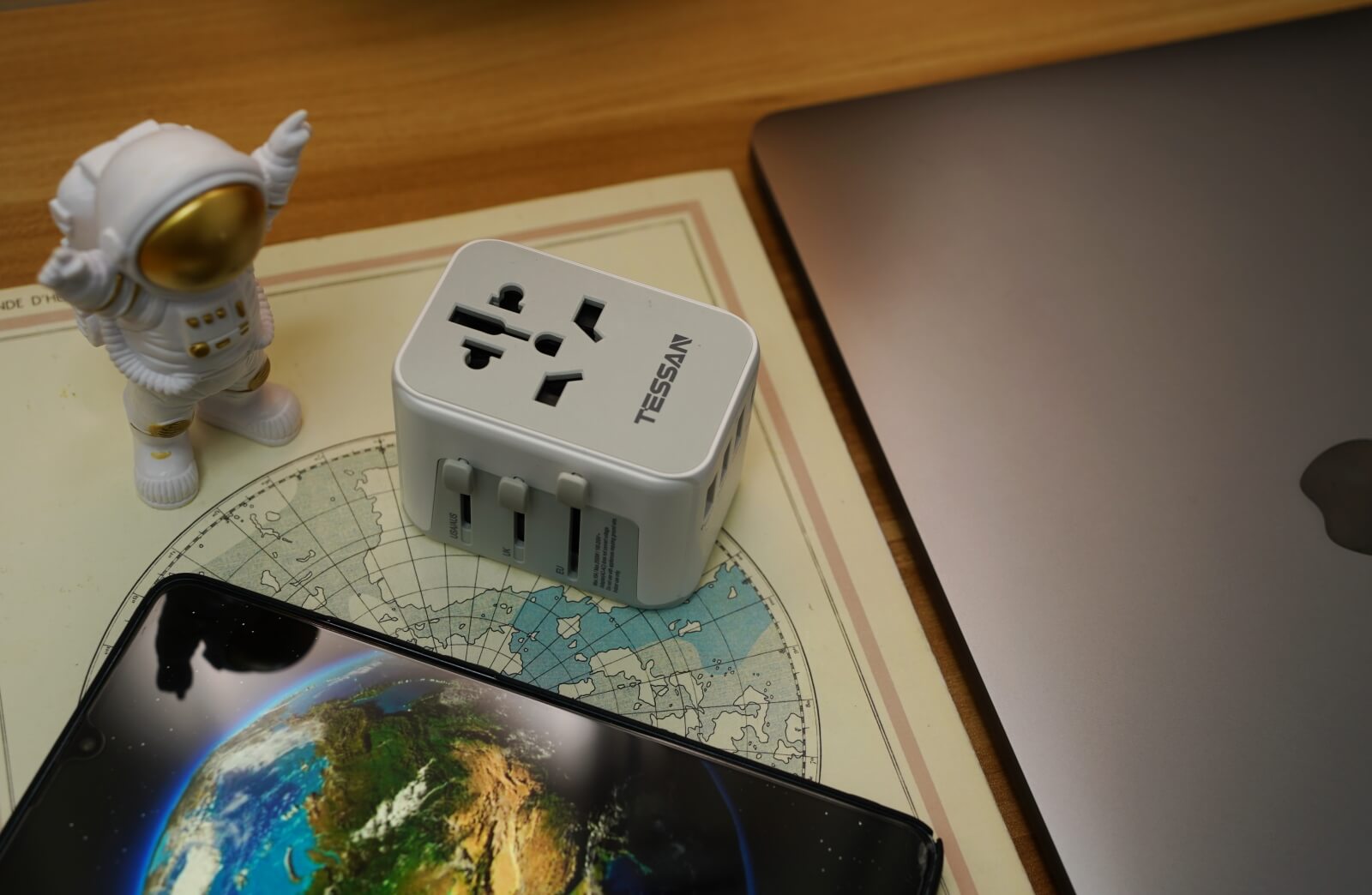

TL;DR: Outlet extenders plug directly into wall outlets (no cord) and work best for tight spaces, rental properties, and bedside/bathroom charging. Power strips have 3-6 foot cords and excel at powering workstations, entertainment centers, and equipment spread across furniture. The key difference isn't features—it's location: use extenders when you need more outlets at the wall, and strips when you need power away from the wall. For complex setups, use both. Always verify UL/ETL certification and get 1,000+ joule surge protection for electronics. Never daisy-chain them together or use with space heaters.
Selecting between an outlet extender and a power strip shouldn't require guesswork. Yet many consumers purchase based on price or availability rather than understanding which solution addresses their specific electrical needs.
This guide clarifies the functional differences between these two power distribution tools and provides decision criteria based on spatial constraints, device requirements, and safety considerations.

Understanding the Fundamental Difference
Outlet extenders mount directly into existing wall receptacles without cords, converting 1-2 outlets into 4-8 charging points. They maintain a compact footprint and eliminate floor-level cable management.
Power strips feature extension cords (typically 3-6 feet) that deliver power to remote locations. They function as mobile charging hubs positioned on desks, entertainment centers, or workbenches.
Both may include surge protection, USB charging ports, and similar outlet counts, but their physical architecture determines appropriate applications.
Optimal Applications for Outlet Extenders

Rental Properties and Non-Permanent Installations
Outlet extenders provide additional capacity without structural modifications. They install tool-free and leave no damage—critical advantages for renters who cannot modify electrical infrastructure.
TESSAN multi-plug outlet extenders transform limited wall outlets into functional charging stations while maintaining clean aesthetics and eliminating trip hazards from floor-level cords.
Space-Constrained Environments
Bedside tables, bathroom counters, and compact workspaces benefit from vertical power distribution. Wall-mounted outlet extenders keep surfaces clear while providing accessible charging for phones, tablets, and small electronics.
Design consideration: Select models with adequate outlet spacing (1.5+ inches) to accommodate larger power adapters without blocking adjacent receptacles.

TESSAN 20W PD Foldable Wall Charger WS06
- 8-in-1 USB wall plug
- Fast & Efficient USB Charging
- Foldable, Travel-Ready Design
- Cruise-Approved & Compact
Dormitories and Shared Living Spaces
Student housing typically provides minimal outlets for multiple occupants with substantial charging needs. A compact extender with 4 AC outlets and 3 USB ports can support laptops, phones, desk lamps, and small appliances without visual clutter.
Safety specification: For electronics including gaming systems and computers, verify surge protection rated at minimum 1,000 joules. Lower ratings provide insufficient protection for sensitive equipment.
Optimal Applications for Power Strips

Home Office and Workstation Environments
Remote work setups require accessible, centralized power for monitors, docking stations, desk lamps, phone chargers, and peripheral devices. Power strips with 6-foot cords enable under-desk mounting or cable management integration.
Flat-plug designs prevent blocking secondary wall outlets, while individual outlet switches provide granular control over device power without physical disconnection.
Entertainment Centers and Media Equipment
Television systems, gaming consoles, soundbars, and streaming devices typically require 6-10 outlets distributed across furniture not adjacent to wall receptacles. Power strips solve this through:
-
Cord length sufficient to route behind entertainment centers
-
High outlet counts (8-12) for complex AV configurations
-
Mounting provisions for concealed installation
-
Surge protection for high-value electronics
Technical note: Gaming PCs and 4K displays require power strips rated for 1,875W continuous load. Insufficient ratings may cause overheating or circuit interruption during peak usage.

TESSAN 15 Ft Surge Protector Power Strip PS07
- 12-in-1 Charging for Modern Homes
- 15 ft Flat Extension Cord with Ultra-Thin Plug
- 20W USB-C Power Delivery Built In
- 2100J Surge Protection with Auto Cutoff
Workshop and Garage Applications
Power tools, battery chargers, and shop equipment demand heavy-duty power strips with 12-14 AWG cords and metal housings. These environments require:
-
Impact-resistant construction
-
Lighted switches for visibility in low-light conditions
-
Overload protection for high-current devices
-
Cord durability for frequent repositioning
Hybrid Implementation Strategy
Complex installations often benefit from combined deployment:
- Fixed infrastructure: Outlet extenders at wall receptacles power stationary equipment (monitors, docking stations, permanent lighting)
- Flexible access: Desktop power strips handle mobile devices and frequently connected/disconnected equipment
This approach provides permanent power for fixed loads while maintaining accessible charging for portable devices—without daisy-chaining or circuit overload.
Safety and Compliance Requirements

Regardless of solution type, verify these certifications:
✓ fire and shock safety testing
✓ Surge protection with documented joule rating
✓ Automatic overload shutoff
✓ Fire-resistant housing materials (ABS or PC plastic)
Critical safety prohibitions:
-
Never connect power strips to outlet extenders (or vice versa)
-
Never use either solution with high-wattage heating appliances (space heaters, hair dryers)
-
Never obstruct outlets with furniture or floor coverings (prevents heat dissipation)
USB Charging Specifications

Modern power solutions integrate USB charging, but output specifications vary significantly:
For outlet extenders:
-
Minimum one USB-C port with 20W output (fast charging compatibility)
-
USB-A ports rated at 18W+ for tablet and Android device charging
-
Verify actual output specifications—advertised ratings may exceed measured performance
For power strips:
-
USB-C ports should deliver 30W minimum for laptop charging (45W optimal)
-
Standard power strips typically provide 20W per port—adequate for phones, insufficient for laptops at full speed
Count USB-dependent devices before purchasing. If charging 4+ USB devices simultaneously, select models with at least 3 USB ports to avoid blocking AC outlets with wall adapters.
Surge Protection Analysis

Not all outlet extenders and power strips include surge protection—some function purely as outlet multipliers.
Surge protection is essential for:
-
Computing equipment (desktops, monitors, external storage)
-
Gaming consoles and displays
-
Networking infrastructure (routers, modems, switches)
-
Any equipment containing sensitive electronics or irreplaceable data
Surge protection is optional for:
-
Mobile device chargers (contain integrated protection)
-
Lighting and low-value appliances
-
Temporary or easily replaceable equipment
In regions with unstable power delivery or frequent electrical storms, specify surge protection rated at 1,500-2,000+ joules. Inadequate surge protection represents false economy—equipment replacement costs typically exceed the price differential between basic and protected models.
Selection Framework

Choose outlet extenders when:
-
Maximizing single wall outlet capacity
-
Operating in space-constrained environments
-
Powering stationary devices at fixed locations
-
Aesthetic considerations favor minimal visible cabling
Choose power strips when:
-
Distributing power across distances exceeding 2 feet
-
Powering dispersed equipment (workstations, media centers)
-
Requiring frequent access to power controls
-
Operating high-wattage equipment requiring heavy-gauge cords
Deploy both when:
-
Managing complex installations with fixed and mobile devices
-
Organizing professional workspaces or media rooms
-
Separating permanent infrastructure from flexible charging needs
Technical Specifications Comparison
|
Feature |
Outlet Extenders |
Power Strips |
|
Cord length |
None (direct mount) |
3-6 feet typical |
|
Outlet count |
4-8 standard |
6-12 standard |
|
USB ports |
2-4 typical |
3-6 typical |
|
Surge protection |
Optional (1000-1500J) |
Optional (1500-2500J) |
|
Mounting |
Wall receptacle only |
Surface/under-desk |
|
Typical load rating |
1875W (15A) |
1875W-2400W (15-20A) |

TESSAN 10 FT Surge Protector PD 20W PS09
- 9 AC outlets, 2 USB-C and 2 USB-A ports
- USB-C PD 20W Fast Charging
- Flat Plug & 10-Foot Extension Cord
- 1050J surge protection
Cost-Benefit Analysis
Cost optimization strategies:
-
Avoid "smart" models with app control unless remote power management provides measurable utility
-
Prioritize surge protection and build quality over feature count
-
Calculate total cost of ownership including potential equipment damage from inadequate protection
Implementation Recommendations
Conduct a systematic power audit:
-
Inventory devices by location (count outlets needed per room)
-
Identify access requirements (wall-mounted vs. surface-accessible)
-
Assess mobility needs (fixed equipment vs. frequently moved devices)
-
Calculate total wattage (ensure circuit capacity isn't exceeded)
Match solution type to spatial requirements rather than selecting based on price or availability. The optimal power distribution strategy uses outlet extenders for wall-based permanent power and power strips for flexible surface-level access.

TESSAN Desk Surge Protector Power Strip PS06
- Power Up to 9 Devices at Once
- Secure Clamp-On Desk Mount
- Advanced 2100J Surge Protection
- 20W USB-C Fast Charging
The outlet extender versus power strip decision reduces to a simple principle: match the tool's physical architecture to your spatial requirements.
Outlet extenders provide compact, permanent power expansion at wall receptacles. Power strips deliver flexible, accessible power across distances. Neither is universally superior—each excels in specific applications.
For most residential and office environments, a strategic combination of both solutions provides optimal results: outlet extenders for fixed infrastructure, power strips for flexible access.
Evaluate your actual usage patterns, select appropriately certified products, and deploy solutions matched to your spatial and electrical requirements.